If you scroll through YouTube, you know it already feels different. Music videos, live sessions, anime-related rap feats, fan edits, all of it lives there. But behind those views something major is shifting in how music gets paid.
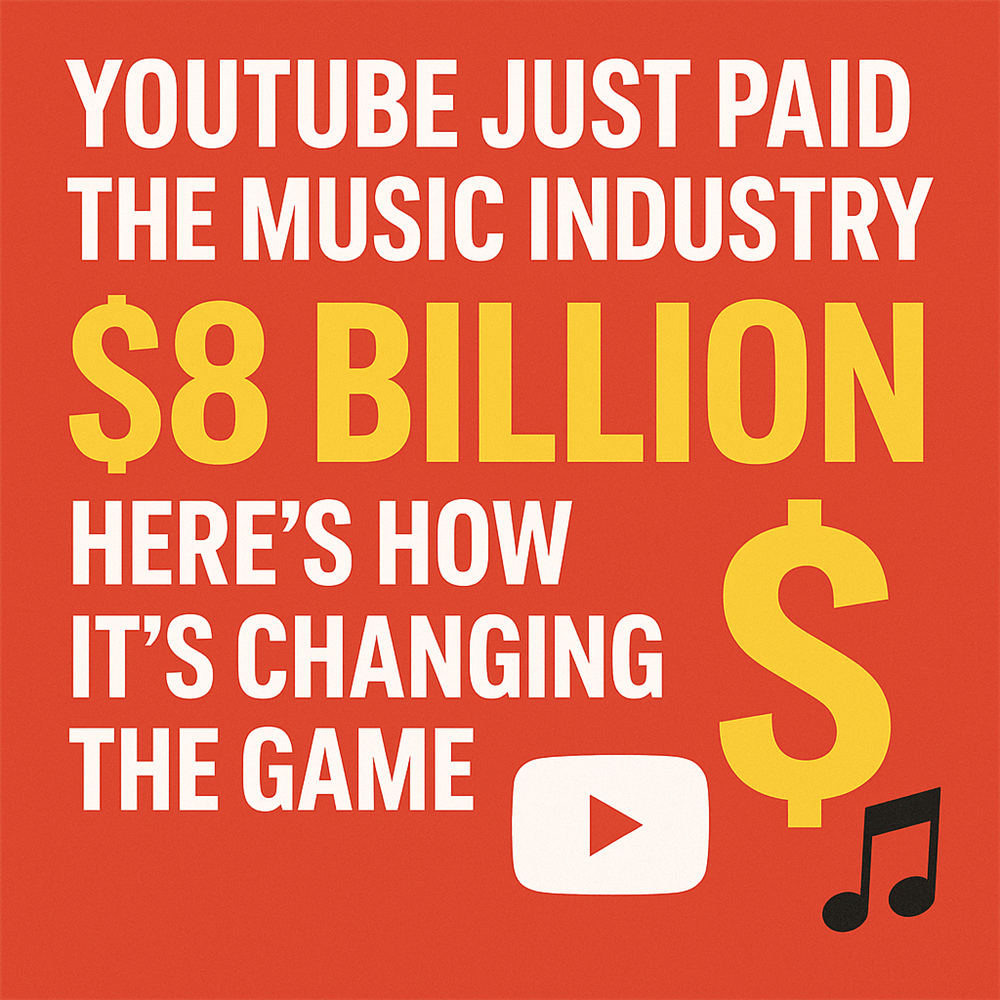
In the twelve-month period from July 2024 to June 2025, YouTube paid over $8 billion to the global music industry. That’s a big leap from about $6 billion just a few years earlier.
For music fans this is more than a headline. For artists, songwriters and...
Show All...
If you scroll through YouTube, you know it already feels different. Music videos, live sessions, anime-related rap feats, fan edits, all of it lives there. But behind those views something major is shifting in how music gets paid.
In the twelve-month period from July 2024 to June 2025, YouTube paid over $8 billion to the global music industry. That’s a big leap from about $6 billion just a few years earlier.
For music fans this is more than a headline. For artists, songwriters and producers it signals that YouTube isn’t just a discovery stage; it is a major payout stage. And for business minds it signals that the rules of streaming revenue are being rewritten.
How YouTube’s Model Really Works (And What Makes It Different)
Let’s break down exactly how YouTube makes money for rights-holders and then compare it with Spotify so that we can see exactly what is unique.
YouTube’s Dual Engine: Ads + Subscriptions
YouTube describes its model as a “twin engine of ads and subscriptions”.
Ad-supported views
Paid subscriptions
How This Compares With Spotify
Spotify also has a freemium model (free users with ads + paid users) but the dynamics differ.
-
Further, YouTube’s ecosystem allows music to live in both the “music streaming” side and the “video content” side. That means songs may earn via traditional uploads, via official channels, via user-generated videos and more. That broadens the revenue base.
-
While Spotify has a well-tuned algorithm for discovery and playlisting, when it comes to highly visual content, music videos, culture clips, remix culture and global shareable short-form stuff, YouTube is often more naturally aligned.
So, what sets YouTube apart? Because of its scale of video plus audio and the dual revenue streams, it can capture value from someone who watches a lyric video, then listens in the paid tier, then shares a fan clip—all within one ecosystem. For a rights-holder that means more opportunity to earn.
The Per-Stream and Payout Landscape
For context there’s been a lot of talk about how much artists earn per stream and how this differs across platforms.
Those aren’t full apples-to-apples numbers because each platform divides revenue differently, deals vary, territories vary, and video vs audio matters. But the key takeaway is: Because YouTube pulls in both ad revenue and subscription revenue across a huge base, rights-holders may benefit from a more diversified pool of income.
Also, the $8 billion payout by YouTube is covering all its music-industry payments (labels, publishers, songwriters) for that 12-month period. And though Spotify still paid more overall (~$10 billion in 2024) YouTube’s growth is strong and its video-first scale gives it different advantages.
What This Means for Artists, Fans and the Business of Music
For Artists and Songwriters
If you are making music today, the implications are clear. Creating music is no longer just about audio drops and playlists. Visual content, video-friendly formats, fan participation and shareable moments matter. Because YouTube’s model rewards both free views and paid listens, artists who engage across that spectrum have more ways to earn. It also means dealing with video rights, Content ID, user-generated content and remix culture is part of revenue strategy not just the traditional audio channel.
For Fans
As a fan it means your views count. Watching a music video, viewing a live session, sharing a lyric clip - all those actions feed into an ecosystem that generates payouts for your favorite creators. Free viewing is valuable. Upgrading to premium helps too. Every click has an impact.
For Business & Industry Observers
What we’re seeing is a shift in the value structure of streaming itself. Platforms that can monetize both the free, mass audience and the dedicated, paying audience hold a clear advantage. YouTube proves that when video, global reach, and multiple revenue streams come together, the result can be meaningful payouts for rights-holders.
For artists and fans, this marks a broader evolution in how music creates value. Visual consumption, video discovery, and user-generated content now drive how songs spread and earn. Success isn’t just measured by streams anymore; it’s about how music lives across platforms, cultures, and formats. The modern music economy is a blend of audio, video, and creator-driven content, where engagement is currency.
The Bottom Line
YouTube has evolved from being a cultural hub for music clips to becoming one of the biggest payers in the music ecosystem. It's more than $8 billion payout shows that the future of music income is not one-dimensional. It rewards artists who capture both casual viewers and loyal listeners. For musicians building careers, for fans who stream and watch, and for industry professionals modelling earnings the message is simple. YouTube isn’t just for discovery anymore. Every view now counts, whether you paid or you did not.
Show Less...