Every few years the music business hits a moment that forces everyone to stop and rethink what the future looks like. We saw it with YouTube, then streaming, then TikTok. Now we are hitting that kind of moment again, and this time it is coming from AI-generated artists.
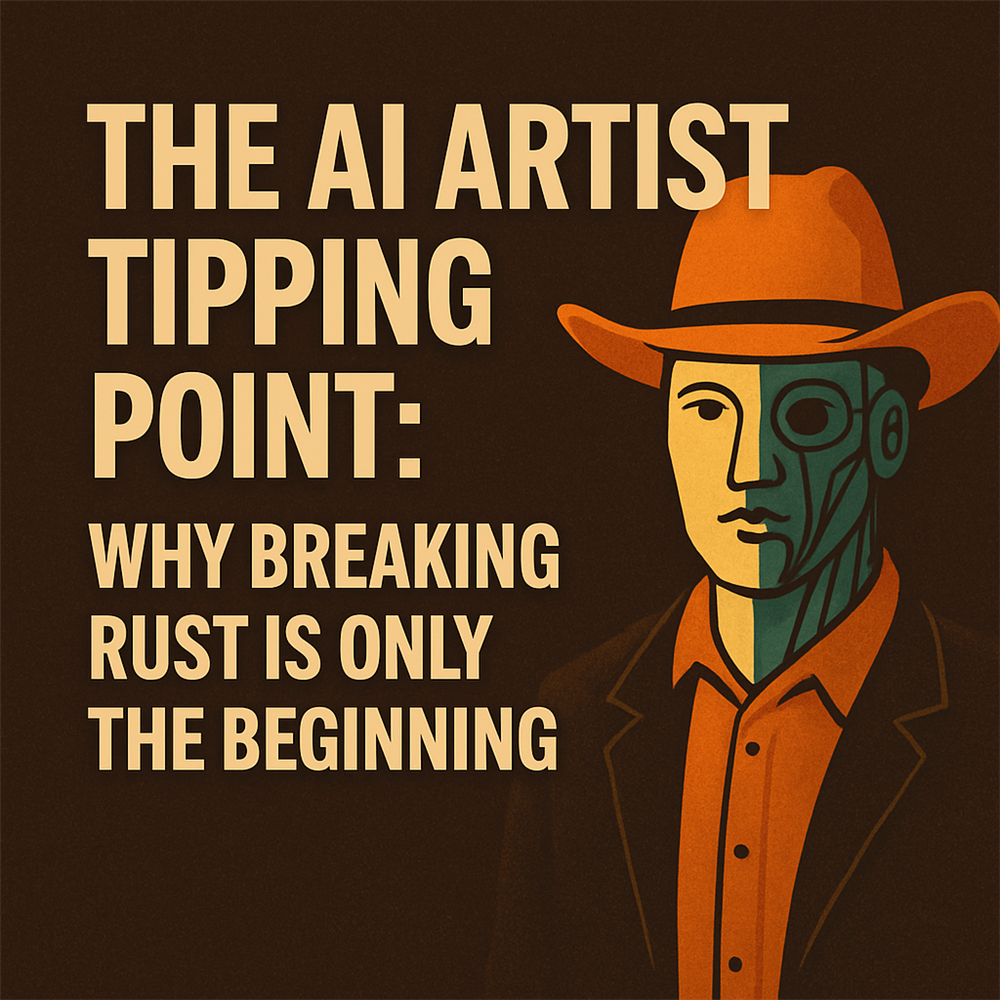
The clearest example right now is Breaking Rust. Their country track Walk My Walk recently reached number one on Billboard’s Country Digital Song Sales chart. Seeing an AI-generated country act at the top of any chart feels...
Show All...
Every few years the music business hits a moment that forces everyone to stop and rethink what the future looks like. We saw it with YouTube, then streaming, then TikTok. Now we are hitting that kind of moment again, and this time it is coming from AI-generated artists.
The clearest example right now is Breaking Rust. Their country track Walk My Walk recently reached number one on Billboard’s Country Digital Song Sales chart. Seeing an AI-generated country act at the top of any chart feels strange, especially in a genre built on lived experience and storytelling. But it is also a sign that things are shifting faster than most people expected.
And Breaking Rust is not the only example anymore.
AI Is Becoming a Real Business Model, Not a Gimmick
The success of an act like Breaking Rust is not just a cultural conversation. It is a business conversation. AI acts do not need studio budgets, travel, or months of recording. There are no cancelled sessions or artist emergencies. You simply need a computer, a creator who knows how to guide the tool, and a distributor. With that combination, an AI song can enter the same marketplace and compete with human artists.
It also helps that the chart Breaking Rust topped focuses on digital sales. Digital downloads make up a very small percentage of today’s market. That means a strategic surge of fans can put a song at the top. It lowers the barrier to entry, which is part of why AI is starting to thrive in that space.
Once a low-cost creative model can compete on public charts, the economic incentives start to shift. And whenever the incentives shift, the industry tends to follow.
Identity Gets Complicated When the Artist Is Not Human
The bigger challenge is not the technology itself. It is the question of identity. Who is the artist when the performer is not a person?
Look at Xania Monet. She is an AI R&B singer who recently signed a three million dollar deal with Hallwood Media. Her creator writes the lyrics and uses Suno to generate her vocal performances and production. Many people did not even know she was AI until her deal went public, which set off a wave of reactions across social media.
Some listeners see Xania as a fresh creative experiment. Others feel it crosses a line, especially when real artists are competing for the same opportunities. Kehlani openly criticized the deal and questioned whether it is fair for an AI project to attract that level of investment when there is no human performer behind the microphone.
This is the new gray area. Who gets credit. Who owns what. Who the public is connecting with. And how transparent creators need to be about what is real and what is synthetic.
The “I Run” Controversy Shows How Messy This Can Get
Another recent example is I Run by producer Haven. The track went viral and then disappeared from streaming services after speculation that the vocals were AI generated. The removal sparked more debate about disclosure, ethics, and where the line should be drawn.
This is what happens when technology leaps forward faster than the rules that guide it. The industry has never had to navigate a moment where a hit song raises the question of whether a singer even exists.
The Copyright Question Is Becoming Impossible to Ignore
The legal side of this is moving just as quickly. Major labels have already sued AI music platforms like Suno and Udio for allegedly training their systems on copyrighted recordings without permission. These lawsuits will play a major role in shaping what companies can and cannot do with generative audio.
On top of that, U.S. copyright law currently requires human authorship. A fully AI generated song may not qualify for copyright protection. You can release it, you can monetize it, and you might even go viral with it, but that does not automatically mean you can protect it in the same way a human created work would be protected.
Some platforms tell users they “own” their output under paid plans, but ownership and copyright are not always the same thing. If a work is not recognized as copyrightable, the traditional protections and rights may not apply. That creates a major gray area for creators, rights holders, and businesses that want to build catalogs around AI generated material.
There are signs of progress. Universal Music Group recently reached an agreement with Udio that allows users to create within a licensed framework. This shows that a middle ground is possible. Still, there is a long way to go before the industry has a clear and unified approach.
What All This Means for the Music Business
The conversation about AI music is no longer happening on the sidelines. It is happening at the top of the charts and inside major companies. The rise of Breaking Rust, the signing of Xania Monet, the controversy around I Run, and the legal battles surrounding Suno and Udio all point to the same conclusion.
AI generated music is no longer a novelty. It is becoming part of the mainstream ecosystem.
For artists, authenticity will matter more than ever. The story behind a song, the emotional weight, the human flaws and experiences that cannot be replicated by code are becoming a competitive advantage.
For publishers and rights holders, the need for new standards is urgent. Credits, splits, ownership rules, and copyright classifications are all about to evolve. The old frameworks are not built for what is happening right now.
For the business as a whole, transparency is becoming essential. Listeners want to know when something is human, when it is AI, and when it is a blend of both. The companies that set clear standards early will likely earn the most trust.
Bottom Line
Breaking Rust’s moment on the charts is important, but the full picture is much bigger. We are watching the early stages of a massive shift. AI artists are signing major deals, controversial songs are rising and falling based on their authenticity, and the legal system is racing to catch up.
The question is no longer whether AI will influence the industry. It already has. The real question is how the creative world chooses to shape this new chapter in a way that respects human artistry while acknowledging how powerful the technology has become.
Show Less...